

Curriculum
Our curriculum is built on a powerful commitment to belonging – where every student feels seen, valued, and empowered to thrive.
We go beyond the National Curriculum, designing a rich, inclusive, and ambitious learning experience that reflects the diversity of our community and the complexity of the world our students will shape.

We believe in a curriculum that is:
- Inclusive and representative, so all learners can see themselves in what they study and feel a deep sense of connection and relevance.
- Broad, deep, and knowledge-rich, securing the key concepts that unlock future learning and enable all students to flourish.
- Carefully sequenced and deliberately planned, ensuring coherence, progression, and clarity across every subject and key stage.
- Delivered by subject experts, who bring passion, precision, and high expectations to every classroom.
- Engaging and empowering, equipping students with the knowledge, skills, and confidence to make active, informed choices about their next steps.
Our curriculum is not just a route to qualifications – it is a foundation for lifelong learning, personal growth, and meaningful contribution to society.
The curriculum overview for each year group can be found linked below.
Knowledge Organisers
To ensure that all pupils secure and retain the most important and powerful knowledge over time, we provide every pupil with a Knowledge Organiser for each unit in each subject. These organisers are carefully designed by our teachers to support pupils in accessing and mastering the curriculum.
The key knowledge outlined in these organisers is regularly referenced during lessons and revisited through retrieval-based Do Now activities at the start of each session. This approach reinforces learning and strengthens long-term memory.
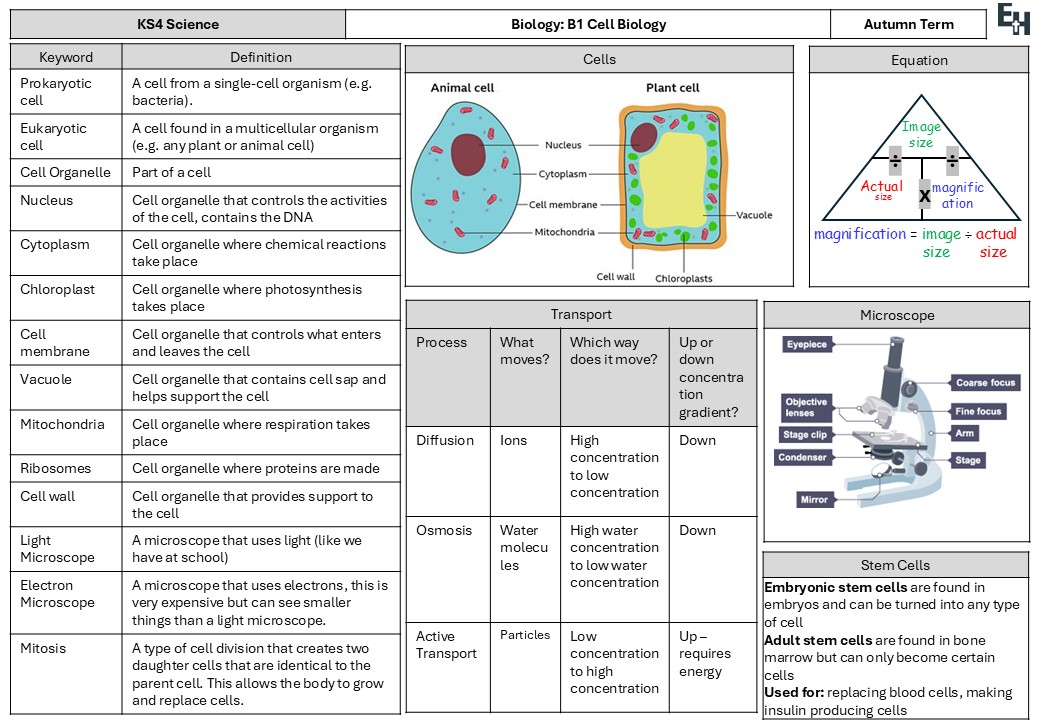
Each pupil stores their subject-specific Knowledge Organisers in their Student Organiser (a document wallet folder), which they are expected to bring to every lesson and take home each evening. This system not only supports pupils’ learning but also enables parents and families to clearly understand the essential knowledge required for each curriculum topic.
Assessment at Key Stage 3
Assessment of pupils’ understanding of the curriculum is ongoing and primarily formative, taking place in every lesson through a variety of strategies such as questioning, use of show me boards, and live feedback.
In addition to this daily formative assessment, we use three further mechanisms:
- Knowledge Quizzes: low-stakes assessments consisting of multiple-choice or short-answer questions. They focus on the core knowledge identified in the Knowledge Organisers, supporting pupils in committing essential information to their long-term memory.
- Curriculum Assessments: Typically conducted at the end of a unit of study, these assessments check pupil progress in both subject knowledge and disciplinary skills. Performance is measured against subject mastery rubrics.
- Summative Exams: These take place at the midpoint and end of the academic year and assess pupil progress across the breadth of the curriculum studied to date. Results are evaluated against mastery rubrics and form the basis of reporting to parents.

Reporting to Parents
Parents receive reports twice a year. Each report includes:
- A holistic ‘working at’ level, based on the range of assessment data outlined above.
- Information on Attitude to Learning and Home Learning.
- A booklet of Mastery Rubrics, enabling parents to interpret descriptors and understand next steps.
Additionally, each year group has one Parents’ Evening annually.
Curriculum at Key Stage 4
Our curriculum principles remain consistent at Key Stage 4, and we are proud to offer a broad and balanced curriculum. All pupils study the following core subjects:
- English Language and English Literature
- Mathematics
- Science (Separate or Combined)
- Religious Education GCSE (including statutory PSHE content)
- Core Physical Education
Pupils then select three additional courses from a wide range of academic GCSEs and vocational options.
Assessment at Key Stage 4
Assessment methods at Key Stage 4 include:
- Regular low-stakes quizzing to reinforce core knowledge.
- For exam-based subjects, a formal assessment each term to determine a holistic ‘working at’ grade. This data is shared with parents termly, alongside Attitude to Learning and Home Learning information.
In Year 11, pupils sit two rounds of Pre-Public Examinations (mocks) in November and March. Key Stage 4 reports also include predicted grades to support college and sixth-form applications.
Supporting Pupils with SEND: Ordinarily Available Provision
We believe the most effective way to support pupils with SEND is through high-quality classroom instruction. Our staff CPD focuses on adaptive and responsive teaching, ensuring every learner can make progress. Pupils are taught in mixed-ability groups for all subjects except Maths and KS4 Science.
A small number of pupils with EHCPs benefit from a supportive curriculum and targeted interventions tailored to their individual needs.